Projects

A tour of the work behind the résumé: four years breaking cars properly at Maruti Suzuki, simulation and machine learning at Texas A&M, and the solar car and thesis that started it all at NIT Rourkela.

HiddenCloak The iOS app I designed, built and shipped alone. Live on the App Store. See it working
Tesla My Tesla projects live on Tesla's internal GitHub, which only Tesla employees can open. Everyone else can read the outcomes on the growth map. Growth map Tesla GitHub (employees)

Crash safety

Maruti Suzuki India Ltd, R&D · 2017–2021. The photos, data and model details belong to MSIL and can't be shared, so these are drawn schematics.

Schematic: a forward-facing van striking a rigid barrier, with small added plates at the front to stop the front structure entering the dash panel Rigid barrier Impact Engine under the cab: little room to crush Dash panel Added plates
Schematic, not to scale.

Making a forward-facing van crash compliant

India's crash norms arrived in October 2019, when one of Maruti's best-selling vans was already on the road and didn't comply. The job was to make it pass without a redesign and with almost no added cost. It took about a year.

  • ~1 yearto compliance
  • Minimal platesnegligible cost increase
  • UG NX
  • DIAdem
  • VBA
  • Excel
  • CAE review
  • Restraint development
Full write-up

Crash-norm compliance came to India later than to the USA, around October 2019, and vehicles already on the market had to meet it. The van in question is still one of Maruti Suzuki's best sellers because of its low cost and seating capacity, and in 2019 it didn't comply.

To keep selling it, Maruti had to modify the design without big changes or real cost. The van is economical precisely because its parts have been through rigorous value analysis and value engineering (VA/VE).

A forward-facing van has its engine below or behind the driver, so the hood is tiny. That's the worst case for a crash test, because there's no room to absorb energy, and this van also has very little gap between the dash panel and the front.

The solution was to add as few plates as possible to stop the front structure piercing the dash panel, and to keep the door aperture and floor stable enough to protect and rescue occupants. It relied on extensive CAE study and rigorous restraint-system development.

I designed and implemented the modified front parts, ran the tests and analysed the results, mostly in UG NX, DIAdem, VBA, Excel and PowerPoint. The vehicle's name and the development data are confidential to Maruti Suzuki India Ltd.
Schematic: an occupant sliding forward on a seat whose base plate lifts under load, closing the angle between torso and thighs to hold the pelvis back Torso–thigh angle closes Base plate lifts under load Occupant slides forward Hybrid III 50th male, sled test
Schematic, not to scale.

A seat that holds the pelvis back

Chest deflection tracks pelvis movement, so the more the pelvis slides, the worse the chest injury. I designed a seat base plate that lifts under the occupant's own load as they slide forward. That closes the torso–thigh angle and holds the pelvis back. On Maruti's sled it cut chest injury by 34%.

  • −34%chest injury vs the standard seat
  • HIII 50thdummy, sled validated
  • UG NX
  • Metal fabrication
  • Sled testing
  • Hybrid III
  • Injury criteria
Full write-up

Passive safety has come a long way, and many cars now carry several airbags, but road accidents are still common. Chest deflection above 50 mm is fatal by injury criteria, and staying safe means keeping it under about 24 mm. Pelvis displacement is proportional to chest deflection, so limiting it matters. Today that's done with ELR three-point belts, pretensioners, load limiters and airbags.

My idea was to restrain the pelvis further by actuating the seat base plate as the occupant slides forward during a crash. That sliding puts a huge downward force on the base plate, enough to bend the seat, and it does bend. In my design, that same force drives the plate upward, closing the angle between pelvis and torso and reducing both pelvis movement and chest injury.

I evaluated the implementation in UG NX, built the prototype with metal fabrication tools, and fitted it into a reinforced body-in-white. Tested on Maruti Suzuki's sled, with a seat built from the start with a high ramp angle, it reduced chest injury by 34% compared with existing crash data for the standard seat.

The pictures, data and model details are proprietary to Maruti Suzuki India Ltd.

Vehicle simulation

Texas A&M, MEEN 689 Automotive Engineering II. Physical models in Modelica and Dymola, built with Sai Preetham Devarasetty and Pinjala Sai Sudhir.

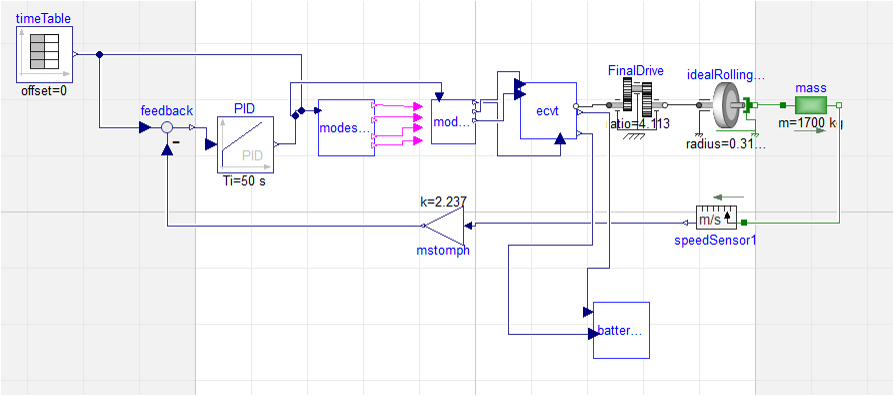
Dymola block diagram of the Prius drivetrain with a PID speed controller, feedback loop and speed sensor

Controller for a Prius hybrid drivetrain

I designed the controller for a Toyota Prius hybrid drivetrain so it tracks the EPA drive cycle while keeping fuel and battery efficiency high.

  • Dymola
  • Modelica
  • PID
  • EPA cycle
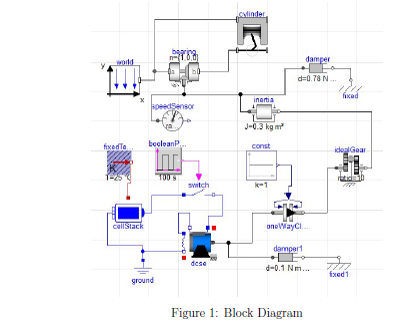
Dymola block diagram of an engine-starting system: battery, starter motor, one-way clutch, flywheel and crank

Engine starting, summer vs winter

I simulated a cold start against a warm one. First I discharged the lights for two hours at 25 °C and −10 °C to set each season's starting state of charge, then cranked the engine through the starter motor and one-way clutch.

  • 25 °C / −10 °Csummer vs winter starts
  • Dymola
  • Modelica
  • Battery SOC
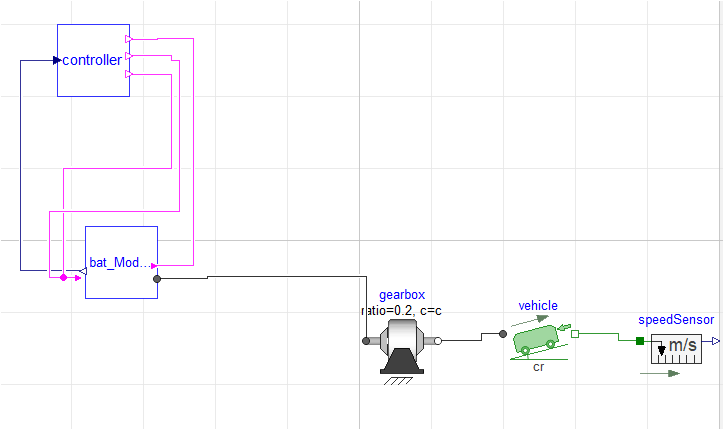
Dymola model of an EV with a controller switching between two battery modules, a gearbox and a vehicle model

Two batteries, one EV

An attempt at better EV battery efficiency: a controller that manages two battery packs, compared head to head with a single-battery model.

  • Dymola
  • Modelica
  • EV powertrain

Deep learning

Texas A&M. Neural networks in PyTorch, NumPy and matplotlib, from first classifiers to sequence models.

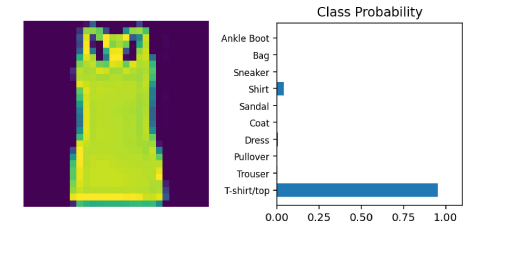
Class probability chart: a T-shirt image classified as T-shirt with high confidence

Clothing classifier

A feed-forward network that classifies Fashion-MNIST clothing images.

  • 96%accuracy
Notebook (PDF)
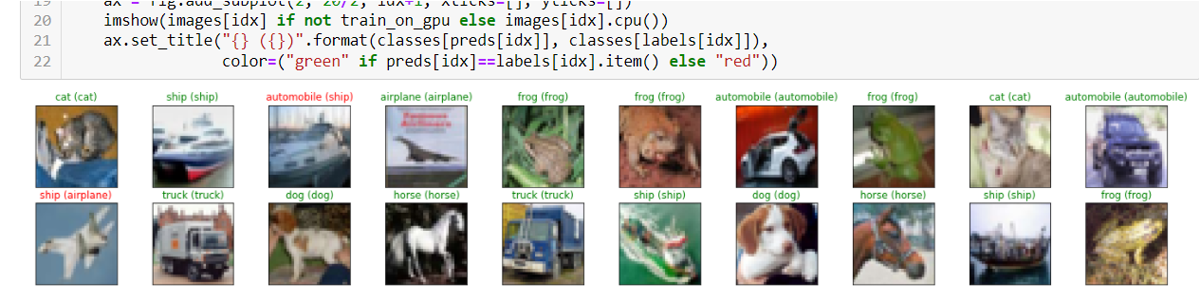
Grid of CIFAR-10 test images with predicted and true labels

Real-image classifier

A convolutional network on CIFAR-10's ten real-world classes.

  • 76%accuracy
Notebook (PDF)
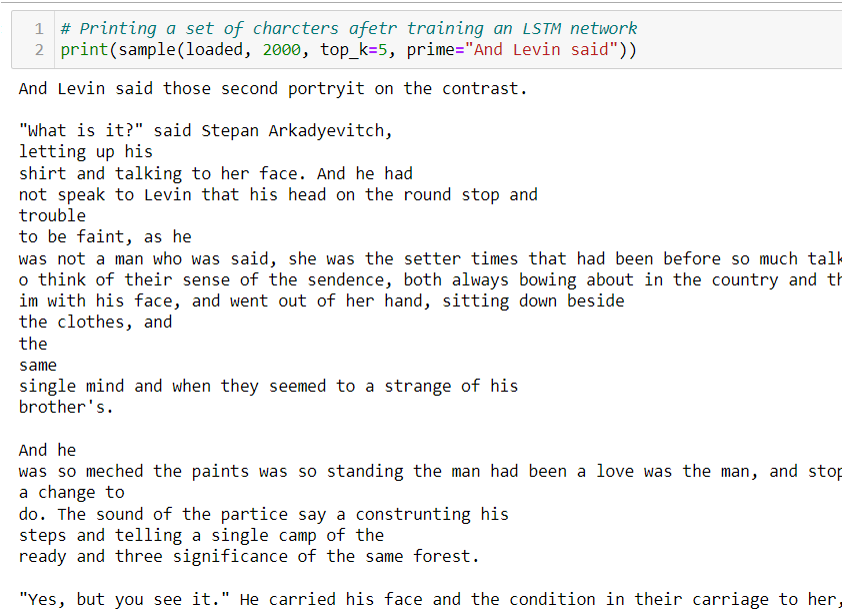
Text generated character by character by an LSTM trained on Anna Karenina

Sentiment and text with LSTMs

An LSTM that predicts movie-review sentiment on IMDB data, and a character-level LSTM that writes new text after training on Anna Karenina.

Sentiment (PDF) Text generation (PDF)
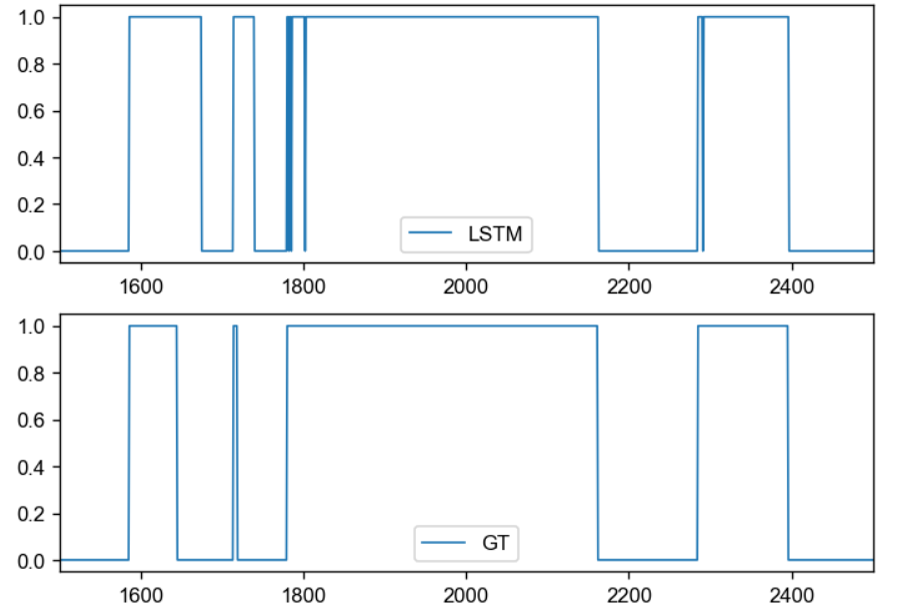
Two plots comparing LSTM-predicted occupancy with ground truth over time; the curves match closely

Static occupant detection

An LSTM that predicts whether a static occupant is present from SLEEPIR sensor data. Dr. Zhangjie Chen (Mechanical Engineering, Texas A&M) was the main contributor; I modified the network to improve its predictions. The code will be shared once he approves.

  • 98%accuracy

Undergraduate

NIT Rourkela, Mechanical Engineering · 2013–2017.

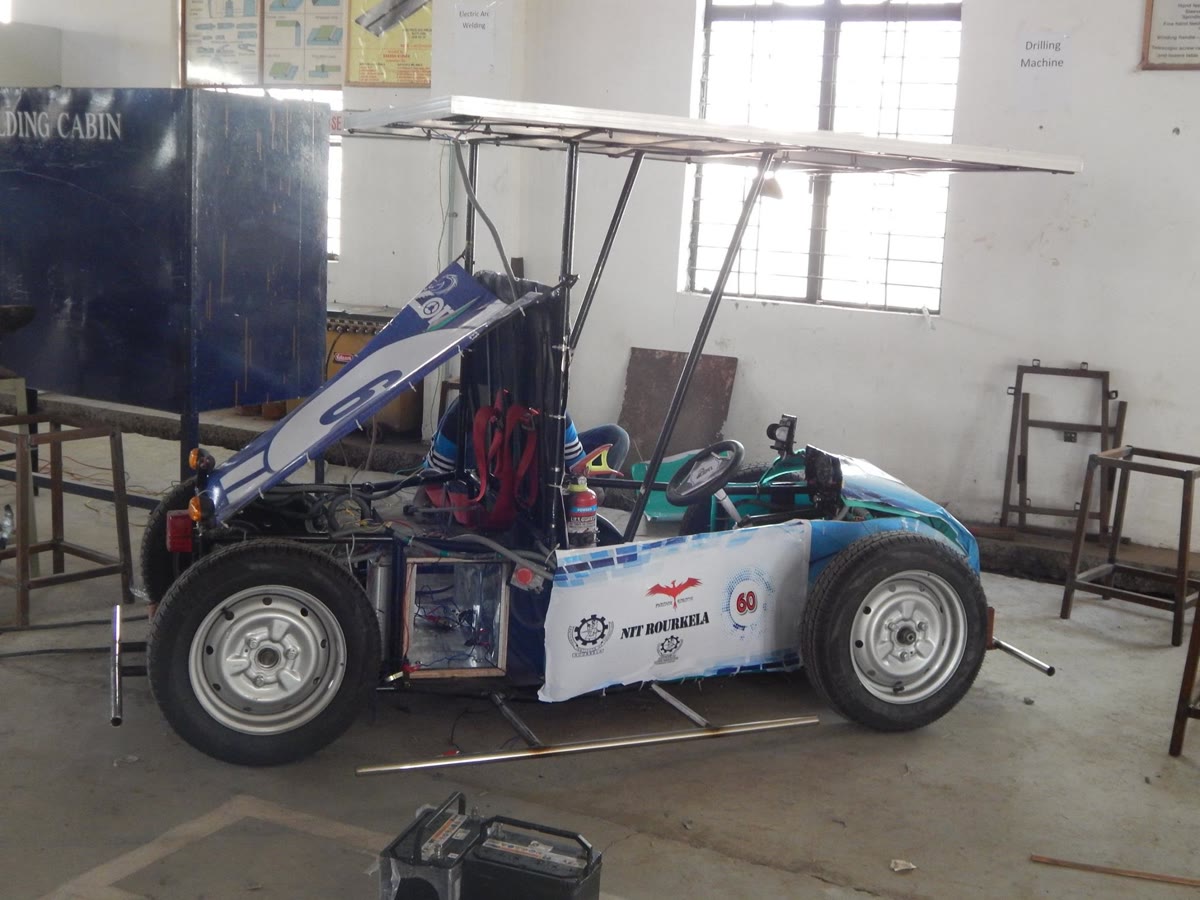
Team ZON's electric solar vehicle, with a solar canopy over an open tubular chassis, in a workshop

Electric solar vehicle, Team ZON

I designed the chassis of an electric solar vehicle in SolidWorks and validated it in ANSYS for the Electric Solar Vehicle Championship (ESVC) organised by ISIE, then worked with the team to put the car on the road.

  • SolidWorks
  • ANSYS
  • Chassis design
  • Fabrication
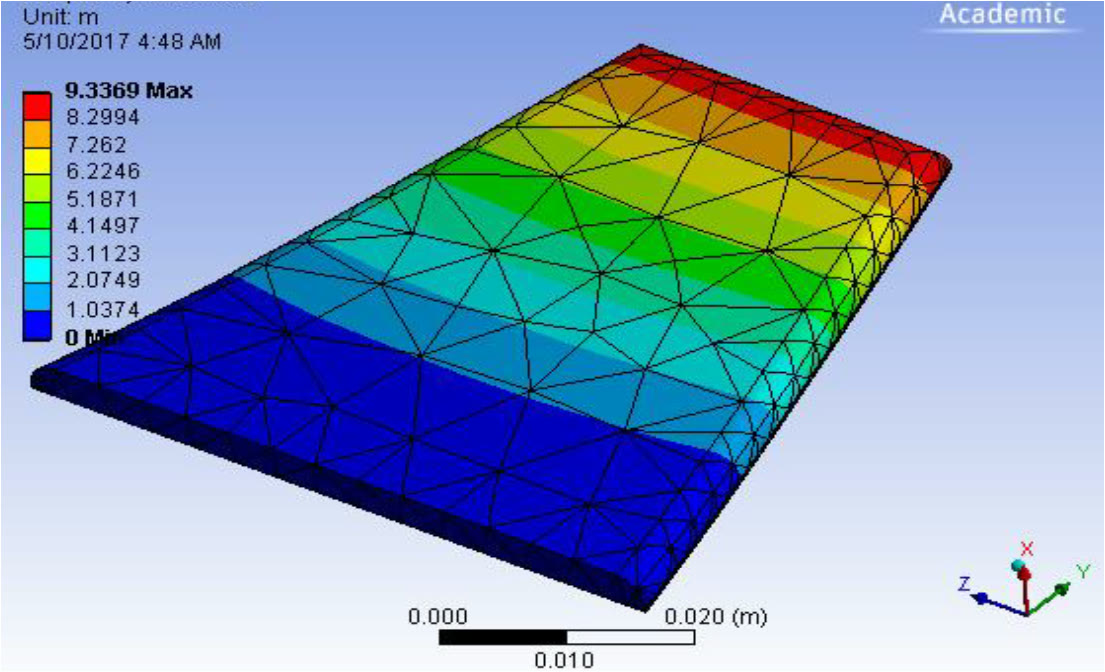
ANSYS contour plot of deformation across a piezoelectric plate, from blue at the clamped end to red at the tip

Harvesting vibration energy from airflow

My undergraduate thesis. With a teammate, I designed an aerofoil-shaped piezoelectric structure that turns airflow-induced vibration into electricity for small electronics.

  • Piezoelectrics
  • ANSYS
  • Aerofoil design

Code & robotics

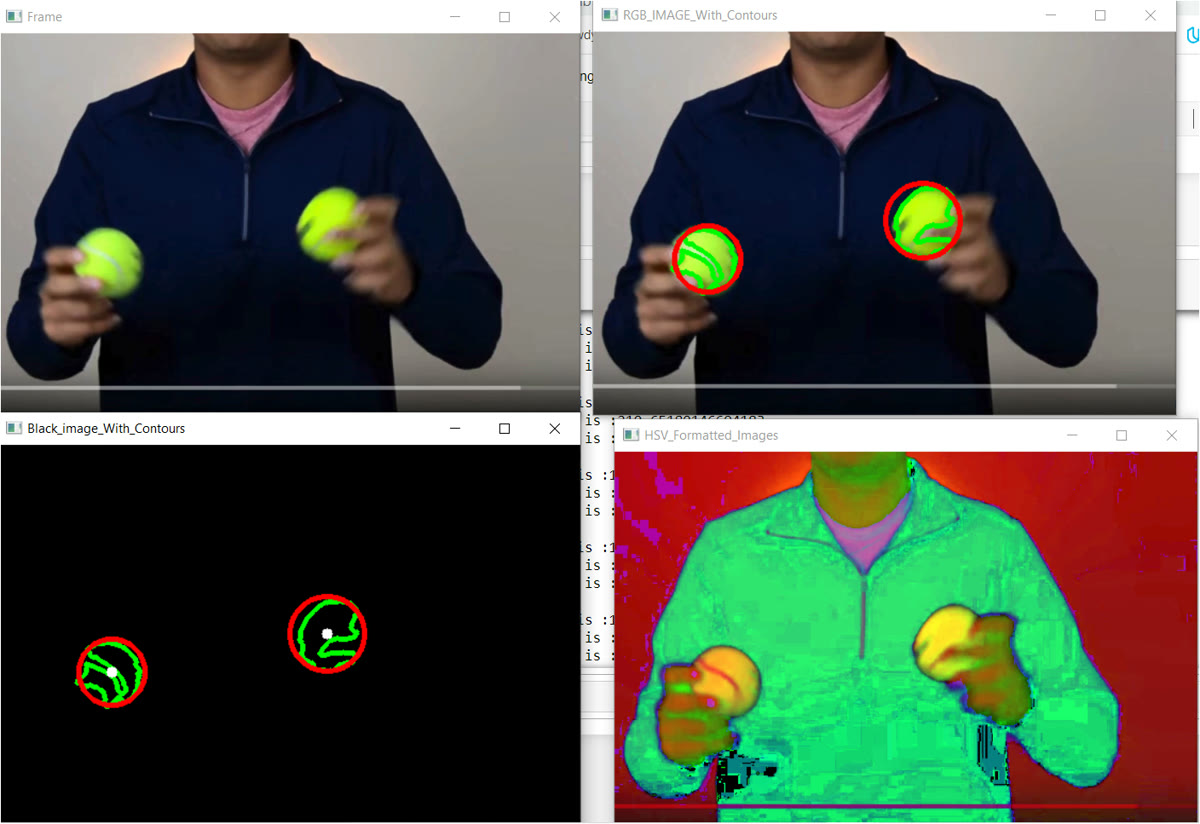
Four video frames of Subrat holding two tennis balls, showing the raw frame, detected contours drawn in red, the binary mask, and the HSV view

Tracking a tennis ball with ROS and OpenCV

ROS Noetic publisher and subscriber nodes that stream video and detect the contour of a tennis ball in each frame using colour masking in OpenCV.

  • ROS Noetic
  • OpenCV
  • Python

More coming soon.

Send a signal